Best Resources for USMLE Step 1 (2026): The Only Guide You Need to Pass
Discover the best resources for USMLE Step 1 in 2026. Learn how to study using UWorld, NBME, Anki, and more with a proven strategy to pass efficiently.
Who This Guide Is For
This guide is for medical students and graduates preparing for USMLE Step 1, especially those who feel overwhelmed by the number of study resources available.
It’s ideal for:
First-time Step 1 test takers
International Medical Graduates (IMGs)
Students with weak basic science foundations
Anyone aiming to build a strong base for Step 2 CK
The strategies here are based on what has consistently worked for high-performing students in recent years.
Why Choosing the Right Step 1 Resources Matters
Many students fail or struggle not because they lack effort—but because they use too many resources or the wrong ones.
The key to passing Step 1 is:
Simplicity
Consistency
Active learning
Using fewer, high-quality resources correctly is far more effective than trying to cover everything.
How USMLE Step 1 Has Changed (2020–2026)
Since becoming pass/fail, Step 1 now focuses on:
Understanding mechanisms
Applying clinical reasoning
Recognizing NBME-style patterns
This means:
Memorization alone is not enough
Passive studying (reading/watching) is inefficient
Question-based learning is essential
Core USMLE Step 1 Resources (Must-Have)
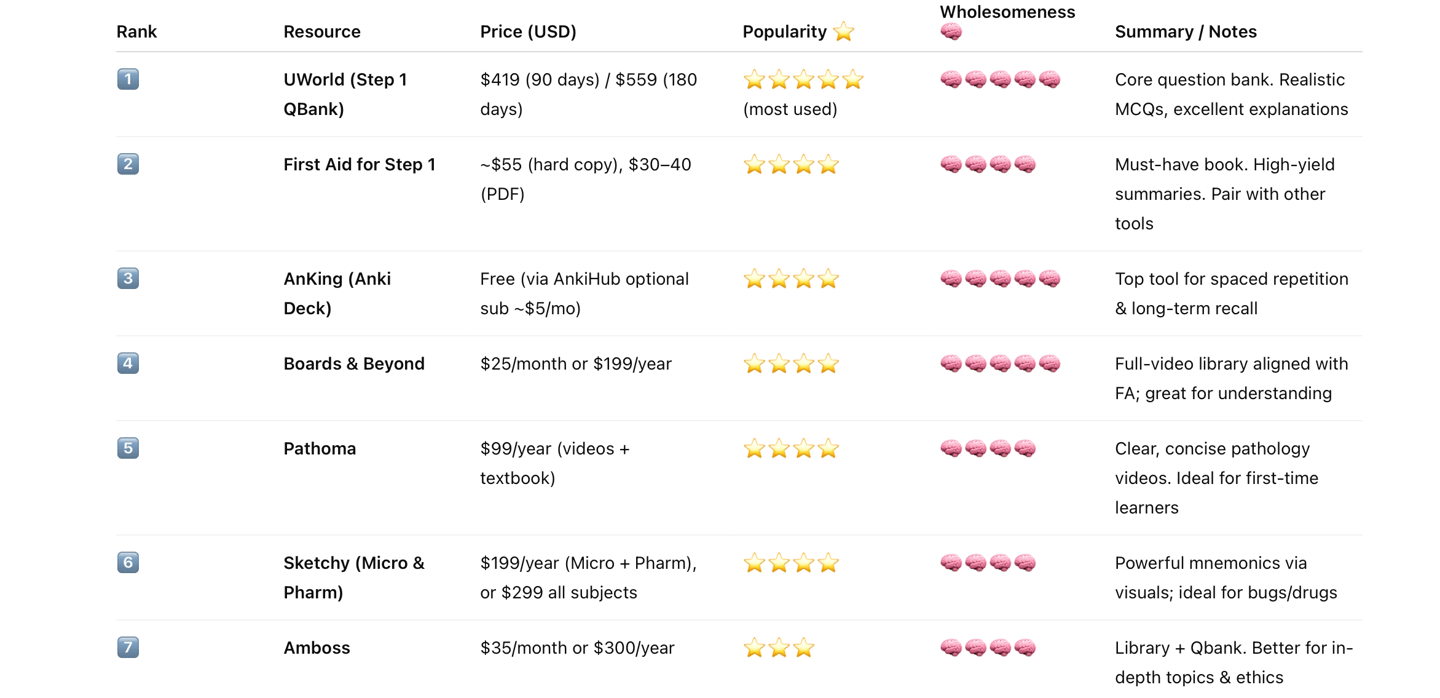
1. UWorld (Most Important Resource)
What Is UWorld?
UWorld is the gold-standard USMLE Step 1 question bank, with over 3,600 exam-style questions.
Why UWorld Is Essential
Closely matches the real exam
Teaches clinical reasoning
Provides detailed explanations
Reinforces high-yield concepts
How to Use UWorld Effectively
Start with system-based blocks
Use timed, non-tutor mode
Complete 60–80 questions per day during dedicated
Focus more on reviewing explanations than scores
👉 SEO Tip: If you only choose one resource for Step 1, make it UWorld.
2. High-Yield Notes (Rapid Review Resource)
What Are High-Yield Notes?
Condensed summaries of commonly tested Step 1 concepts designed for quick recall.
Why They Work
Focus only on exam-relevant material
Help reinforce weak areas
Ideal for last-minute revision
How to Use Them
Before UWorld → preview topics
After UWorld → reinforce mistakes
Final weeks → rapid review
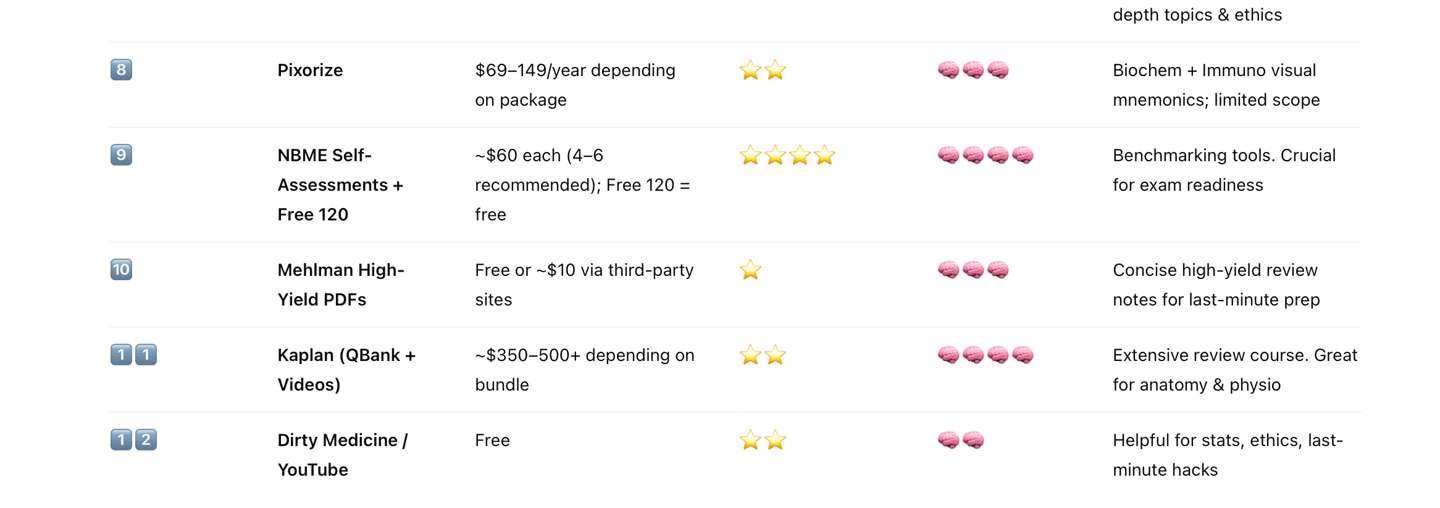
3. NBME Self-Assessments (Most Accurate Predictor)
What Are NBME Exams?
Official self-assessment tests (NBME 29–33 + Free 120) that closely resemble the real Step 1 exam.
Why NBME Exams Matter
Best indicator of readiness
Teach exam-style thinking
Highlight weak areas
How to Use NBME Exams
Take under timed conditions
Review mistakes efficiently
Focus on understanding—not memorization
4. Anki (Optional but Powerful)
What Is Anki?
A spaced repetition flashcard tool for long-term memory retention.
Best Uses
UWorld incorrect questions
NBME mistakes
Microbiology & pharmacology
What to Avoid
Large premade decks that consume hours daily
Secondary Resources (Use Only If Needed)
AMBOSS (For Weak Areas)
What Is AMBOSS?
A question bank + medical library with detailed explanations and visuals.
When to Use AMBOSS
After completing UWorld
If NBME scores are still below passing
Best For
Physiology
Biostatistics
Ethics
Boards & Beyond (Concept Building)
Best for:
Weak foundational knowledge
Long study gaps
Pathoma (Pathology Focus)
High-yield for:
Chapters 1–3
Hematology
Sketchy (Visual Learning)
Best for:
Microbiology
Pharmacology
Ideal for visual learners.
Anatomy Atlases (Reference Only)
Use only when needed for visualization—not as a main resource.
Resources You Should Avoid (Most Students)
First Aid for Step 1
While popular, First Aid:
Encourages passive reading
Lacks deep explanations
Is less aligned with the current exam format
Kaplan
Kaplan is:
Too detailed
Time-consuming
Inefficient for most students in 2026
Best Study Plan for USMLE Step 1
Daily Study Plan
Review previous mistakes (30–60 min)
Complete UWorld blocks (main focus)
Review explanations deeply
Reinforce with notes or Anki
Weekly Strategy
Identify weak areas
Target those topics
Track NBME progress
Common Mistakes to Avoid
Using too many resources
Watching excessive videos
Ignoring UWorld review
Focusing on scores instead of learning
Not practicing NBME-style reasoning
FAQs (High-Search Keywords Section)
Do I need to do UWorld twice?
No. One thorough pass is usually enough.
Can AMBOSS replace UWorld?
No. UWorld is essential.
Do I need Anki for Step 1?
No, but it helps with retention.
How do I know I’m ready for Step 1?
When your NBME scores are consistently at or above passing.
Should I delay my exam?
Only if multiple NBMEs are below passing despite targeted review.
What You Actually Need (Minimal Resource List)
UWorld
High-yield notes
NBME 29–33 + Free 120
Anki (optional)
AMBOSS (if needed)
Three-Line Summary
Master UWorld.
Reinforce weak areas with high-yield notes.
Use NBME exams to confirm readiness.
Final Thoughts
USMLE Step 1 preparation doesn’t have to be overwhelming.
A focused strategy using a small number of high-quality resources is the most reliable way to pass.
If you prioritize:
Active learning
Consistent question practice
Smart review
You will build the foundation needed not just for Step 1—but for Step 2 CK and beyond.