USMLE Step 2 CK: Complete 2026 Guide (Exam Format, Scoring, Study Strategy & Resources)
Introduction
USMLE Step 2 CK (Clinical Knowledge) is one of the most critical milestones in a medical student’s journey toward residency training in the United States. With the transition of Step 1 to a pass/fail system, Step 2 CK has become the primary objective metric used by residency programs to compare applicants. It is no longer just another exam — it is now a defining factor that can significantly influence interview offers, ranking decisions, and ultimately your match outcome.
Unlike Step 1, which focuses heavily on basic sciences, Step 2 CK is designed to assess your ability to apply clinical knowledge in real-world patient care scenarios. It tests how well you think, prioritize, and manage patients across a wide range of specialties. This makes preparation fundamentally different: success is less about memorization and more about clinical reasoning and decision-making.
In this guide, you will find a complete and up-to-date overview of Step 2 CK, including the latest exam format changes for 2026, scoring system, registration pathway, high-yield resources, and a practical study strategy that has consistently worked for high scorers.
What is USMLE Step 2 CK?
Step 2 CK evaluates whether you are ready to function safely and effectively as a physician under supervision. It focuses on clinical knowledge that is directly applicable to patient care, including diagnosis, investigation, and management.
The exam integrates multiple disciplines rather than testing them in isolation. A single question may require knowledge of internal medicine, pharmacology, ethics, and interpretation of investigations simultaneously. This reflects real clinical practice, where patient care decisions are rarely confined to a single specialty.
Internal medicine forms the backbone of the exam and constitutes the largest proportion of questions. However, strong coverage of surgery, pediatrics, obstetrics and gynecology, and psychiatry is equally essential. Increasingly, there is also emphasis on preventive medicine, screening guidelines, ethics, and quality improvement.
Step 2 CK Exam Format (2026 Update)
Understanding the structure of the exam is essential, not only for preparation but also for building the stamina required to perform well on test day. Importantly, the USMLE is introducing a structural change in 2026 that candidates must be aware of.
For exams taken before May 7, 2026, Step 2 CK consists of eight blocks, each lasting 60 minutes, with up to 40 questions per block. The total number of questions does not exceed 318. Candidates are allotted 45 minutes of break time, which can be extended if the optional tutorial is skipped.
For exams taken on or after May 7, 2026, the total content remains unchanged, but the format shifts to sixteen shorter blocks, each lasting 30 minutes, with up to 20 questions per block. The total number of questions remains the same, but break time increases to 55 minutes, while the tutorial duration decreases to five minutes.
This change does not alter the difficulty or content of the exam, but it does affect pacing and mental rhythm. Shorter blocks may reduce fatigue but require quicker transitions and sharper focus from the very start of each section.
How Step 2 CK is Scored
Step 2 CK is scored on a three-digit scale ranging from 1 to 300. The current passing score is 218, and this standard is periodically reviewed by the USMLE program to reflect the level of competence required for safe medical practice.
Scores are calculated using statistical models that adjust for differences in exam difficulty across different test forms. This ensures fairness and comparability between candidates taking the exam at different times. It is also important to understand that some questions on the exam are experimental and do not contribute to your final score, although they are indistinguishable from scored questions.
Results are typically released within three to four weeks, although candidates should allow up to eight weeks in some cases. Because Step 2 CK plays a major role in residency applications, especially for IMGs, it is essential to plan your exam timing so that your score is available before application deadlines.
In terms of performance, a score above 250 is generally considered highly competitive, particularly for surgical and competitive specialties. Scores in the 240s are strong and open many opportunities, while scores in the 230s are around the average range. However, the definition of a “good score” varies depending on your target specialty, and this context is crucial when setting realistic goals.
Why Step 2 CK Matters More Than Ever
The shift of Step 1 to pass/fail has fundamentally changed the dynamics of residency selection. Program directors now rely heavily on Step 2 CK as the most objective measure of an applicant’s academic and clinical ability.
More importantly, Step 2 CK is seen as a better reflection of real-world competence. It assesses how well you can apply knowledge to patient care, which aligns closely with the demands of residency training. As a result, a strong Step 2 CK score can significantly strengthen your application, even if other aspects are average.
For international medical graduates, this exam is particularly important. In a highly competitive environment where clinical experience in the U.S. may be limited, Step 2 CK serves as a key indicator of readiness and capability.
How to Register for Step 2 CK
The registration process differs slightly depending on whether you are a U.S. medical student or an international medical graduate.
U.S. students typically apply through the National Board of Medical Examiners (NBME), while international medical graduates apply through the Federation of State Medical Boards (FSMB) and must meet certification requirements set by ECFMG (now Intealth).
The process involves creating an account, verifying your identity, submitting required documentation, and selecting an eligibility period. Once approved, you receive a scheduling permit, which allows you to book your exam at a Prometric testing center.
It is strongly recommended to book your exam date early, especially during peak months such as May to August, when availability becomes limited due to high demand.
When Should You Take Step 2 CK?
Timing your exam correctly can significantly influence your performance. Most U.S. medical students take Step 2 CK after completing their core clinical rotations, typically between the end of the third year and the beginning of the fourth year. At this stage, clinical knowledge is fresh, and there is sufficient time for focused revision.
For international medical graduates, timing is more flexible but must be aligned with application cycles. Ideally, the exam should be taken at least four to six months before residency application deadlines to ensure that scores are available in time.
A practical and evidence-based approach is to schedule your exam only after achieving your target score on at least two self-assessment exams. This reduces uncertainty and increases confidence going into the real exam.
Best Study Resources for Step 2 CK
Preparation for Step 2 CK is heavily resource-dependent, but success does not come from using many resources — it comes from using the right ones effectively.
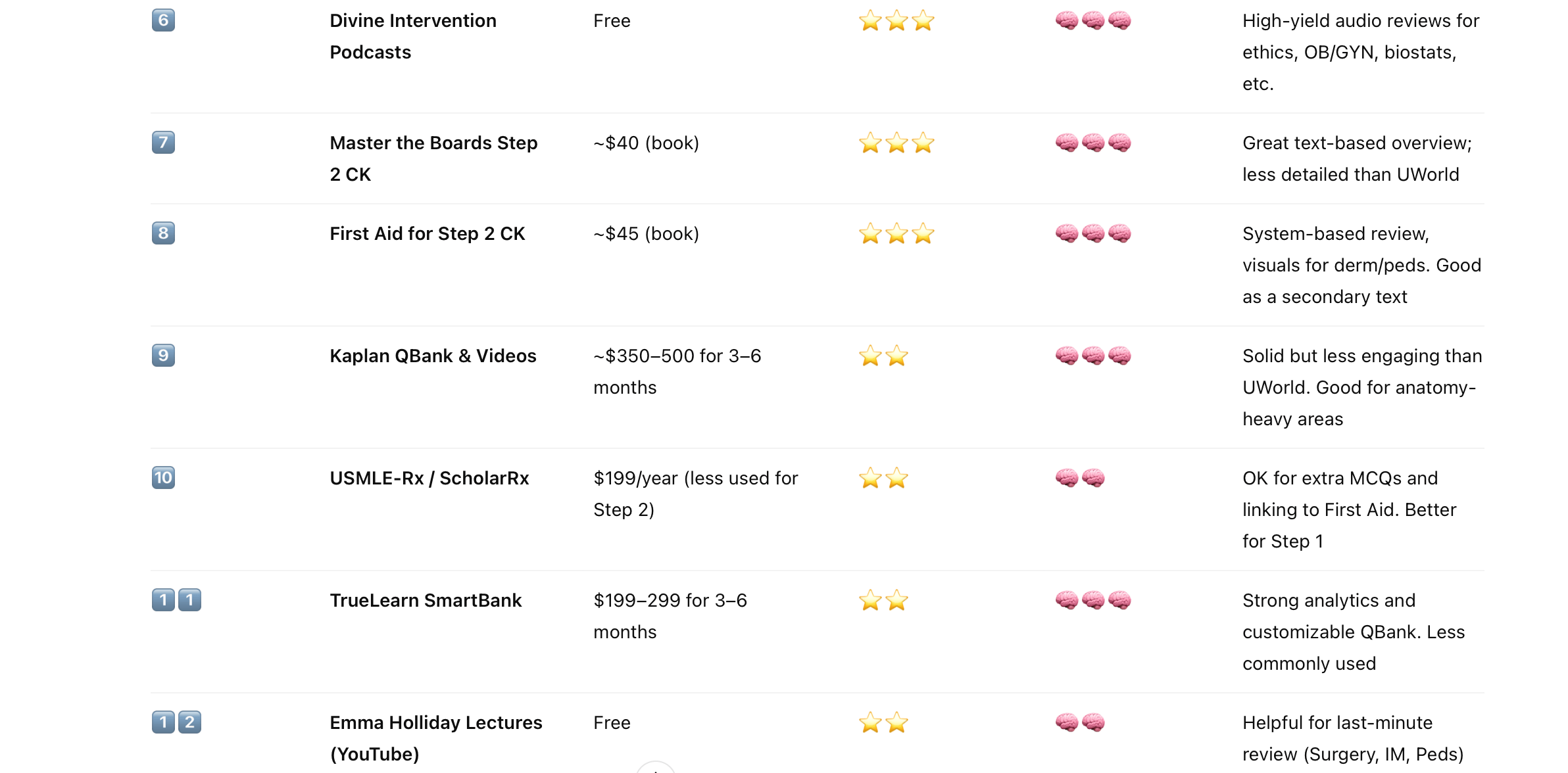
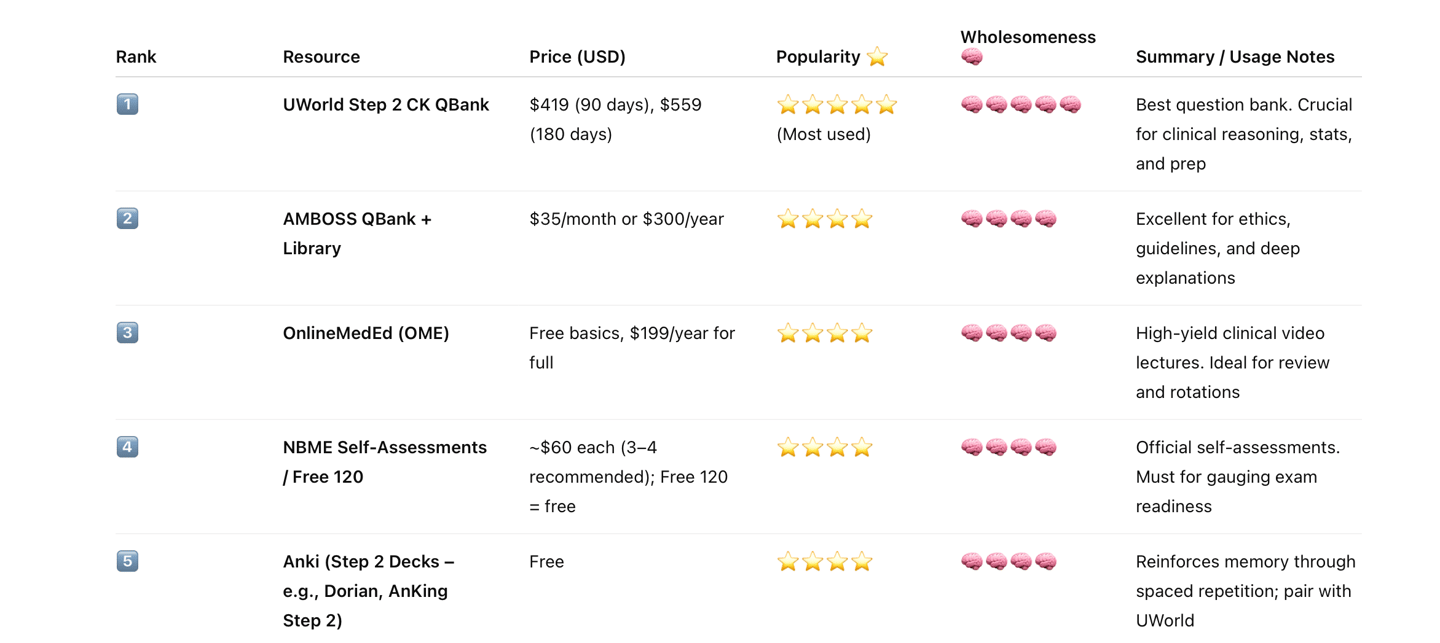
UWorld remains the single most important resource and is widely regarded as the gold standard. Its strength lies in its ability to simulate real exam scenarios and provide detailed explanations that teach clinical reasoning, not just facts. The key to using UWorld effectively is to focus on understanding explanations thoroughly, including why incorrect options are wrong.
NBME self-assessments are equally essential, as they are the most accurate predictors of your final score. They help identify weaknesses, track progress, and determine readiness for the exam.
CMS forms are particularly useful for developing an understanding of how exam questions are structured and how subtle wording can influence the correct answer. They train you to think like the examiners.
AMBOSS can serve as a supplementary resource, especially for topics such as ethics, screening guidelines, and areas where UWorld explanations may feel insufficient. However, it should not replace primary resources.
Anki can be helpful for reinforcing weak areas, but it should be used selectively. Creating personalized flashcards based on mistakes is far more effective than relying on large pre-made decks.
How to Study for Step 2 CK Effectively
High performance in Step 2 CK is less about the number of hours studied and more about the quality of learning. Active learning techniques are essential. Instead of passively reading or watching videos, you should engage with the material through questions, self-explanation, and recall.
Spaced repetition plays a key role in long-term retention. Revisiting topics at intervals helps strengthen memory and improves recall under exam conditions. This can be achieved through structured review cycles or tools like Anki.
Simulating real exam conditions is another critical component. Practicing timed blocks helps build endurance, improves time management, and reduces anxiety on test day. Over time, this trains your brain to perform under pressure.
Equally important is adopting a minimalist approach. Many students fall into the trap of using too many resources, which leads to superficial learning and burnout. Mastering a few high-yield resources is far more effective than spreading your efforts too thin.
Common Mistakes to Avoid
One of the most common mistakes is starting preparation without a clear plan. Without structure, study becomes inconsistent and progress slows significantly. Setting a target exam date and working backward helps maintain focus and accountability.
Another major mistake is preparing for Step 2 CK as if it were Step 1. Relying on memorization and isolated facts is insufficient. The exam demands integration and application of knowledge.
Delaying self-assessment exams is also a critical error. These exams should be used early and regularly to guide your preparation, not just at the end.
Finally, many students neglect high-yield topics such as biostatistics and ethics until the last minute. These areas are consistently tested and relatively easy to master with proper preparation, making them an opportunity to gain valuable points.
Final Thoughts
Step 2 CK is a challenging but highly manageable exam when approached with the right strategy. It rewards clarity of thought, clinical reasoning, and consistent effort over time.
By focusing on high-yield resources, actively engaging with questions, and regularly assessing your progress, you can build both competence and confidence. Whether your goal is a competitive specialty or simply securing a solid residency position, a well-planned approach to Step 2 CK can significantly enhance your chances of success.